
Fire hydrant systems
Internal and external hydrants and landing valves that give firefighters water at the right pressure across the site.
Fire fighting systems
Hydrants, sprinklers, fire pumps and suppression systems, designed and installed to international standards and local regulations, with UL Listed and FM Approved equipment from Bristol.
The basics
Recognizing the critical safety needs of modern buildings, MA Engineering Services offers comprehensive Fire Fighting solutions with proven experience in both products and services.
A fire fighting system is only as good as its design, its water supply and its maintenance. We design, supply, install, test and commission complete water-based systems, from the fire pumps to the hydrants, hose reels and sprinkler heads.
All systems are designed and installed in accordance with international standards and local regulations, ensuring maximum safety and compliance.

How it works
Four parts work together so water reaches a fire at the right pressure, automatically or by hand.
A dedicated fire water tank or supply holds enough water for the duration the design requires.
Electric and diesel pumps deliver the required pressure; a small jockey pump keeps the system pressurised between fires.
Mains, risers and valves carry water to hydrants, hose reels and sprinkler zones, with alarm valves showing where water is flowing.
Sprinkler heads open individually when heated by a fire, so only those near it release water. Hydrants and hose reels let firefighters and trained staff attack the fire.
Standards: the Building Code of Pakistan – Fire Safety Provisions 2016, developed by the Pakistan Engineering Council with the National Disaster Management Authority, is based on NFPA 1 and applies to new and existing buildings. It refers to NFPA standards including NFPA 13 (sprinklers), NFPA 14 (standpipes and hoses), NFPA 20 (fire pumps) and NFPA 25 (inspection, testing and maintenance).
What we install
Every part of a water-based fire fighting system, plus special suppression where water is not suitable.
Internal and external hydrants and landing valves that give firefighters water at the right pressure across the site.
Sprinklers that detect and control a fire at an early stage, automatically and around the clock.
Electric, diesel and jockey pump sets that keep the system pressurised and ready.
Fire hose reels, landing valves and control valves for first-response firefighting and system control.
Special systems for areas where water is unsuitable, such as electrical rooms and server rooms.
Acceptance testing at handover, and periodic inspection and maintenance afterwards to keep systems ready.
Equipment
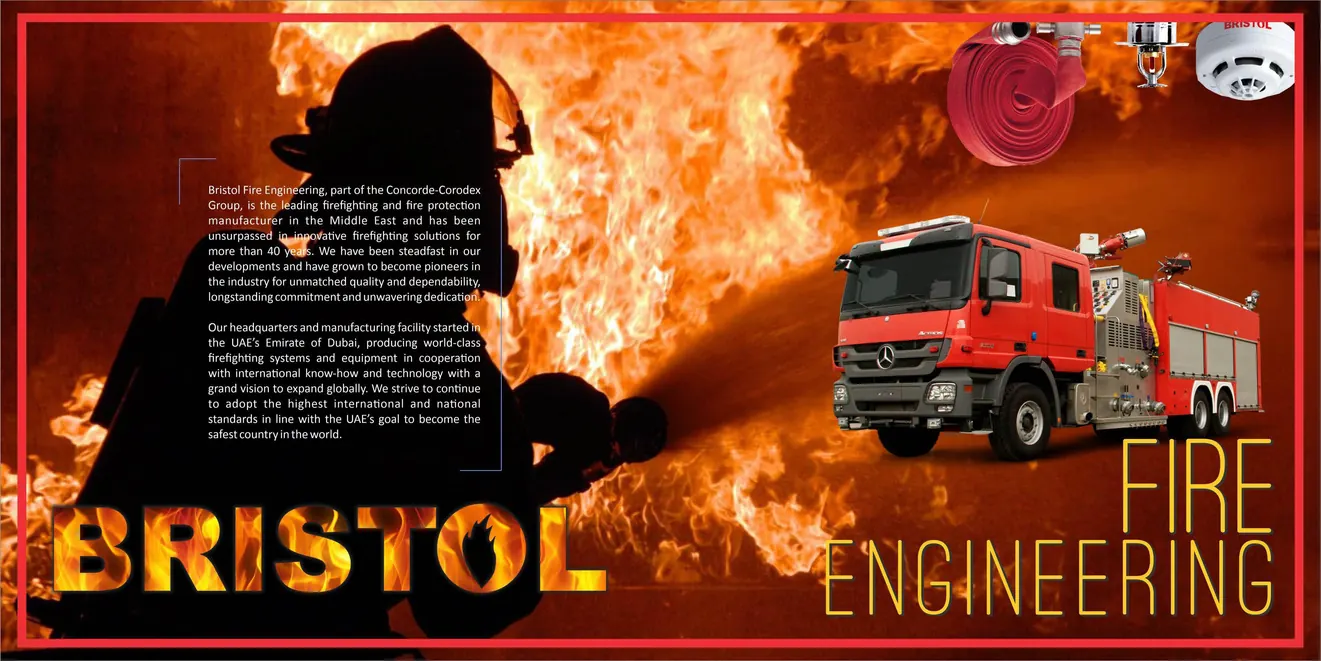
Fire fighting equipment and accessories that are UL Listed / FM Approved — from pumps and cabinets to sprinklers, alarms and suppression.
Bristol fire fighting products
Planning a project
These decisions at design stage decide whether a system will work on the day it is needed.
The building’s use and contents decide the design: a warehouse, a hospital and an office need different sprinkler layouts and water supplies.
The fire water tank and pumps must deliver the required flow and pressure for the full duration set by the design standard.
Fire pumps need a secure power source. A diesel pump set keeps the system working during a power cut.
Sprinkler pipes share ceilings with ducts, cable trays and lighting. Coordinating them on drawings avoids clashes on site.
Designs should follow the Building Code of Pakistan fire safety provisions and the NFPA standards it refers to, and satisfy the local authorities.
NFPA 25 sets out regular inspection, testing and maintenance of water-based systems for the life of the building. An untested system is an unknown system.
FAQ
Can’t find your answer? Ask our engineers.
Fire hydrant systems, automatic sprinkler systems, fire pumps (electric, diesel and jockey), fire hose reels and valves, and fire suppression systems, followed by testing, commissioning and maintenance.
The Building Code of Pakistan – Fire Safety Provisions 2016, developed by the Pakistan Engineering Council with the National Disaster Management Authority, sets the minimum requirements. It is based on NFPA 1 and refers to NFPA standards such as NFPA 13 for sprinklers, NFPA 14 for standpipes, NFPA 20 for fire pumps and NFPA 25 for maintenance.
A hydrant system supplies water through hydrants and hoses for firefighters and trained staff to use by hand. A sprinkler system works automatically: individual sprinkler heads open when heated by a fire and start controlling it before anyone arrives. Most larger buildings need both.
It is a small pump that makes up minor pressure losses and keeps the system pressurised, so the main fire pumps only start when water actually flows during a fire.
A diesel-driven pump does not depend on mains electricity, so the system keeps working during a power failure. Many designs pair an electric main pump with a diesel standby pump.
The equipment has been tested and certified by UL or FM Approvals, independent organisations that test fire protection products against published standards. Bristol equipment carries these listings and approvals.
NFPA 25 sets inspection, testing and maintenance frequencies for each component, from frequent visual checks to annual tests. We provide testing, commissioning and maintenance.
Yes. The Building Code of Pakistan fire safety provisions apply to existing buildings as well as new ones. We can survey an existing system and propose the upgrades it needs.
Start a project
Tell us about the building and how it is used, or send the drawings. Our engineers will propose a fire fighting system that meets the codes.